
What’s making manufacturing hiring so slow even when demand is high?
Today’s HR teams are hiring for specialized, hands-on roles in a labor market shaped by an aging workforce, persistent skills gaps, and real geographic constraints. Many positions require certifications, technical experience, and on-site presence. They aren’t roles candidates can easily “learn on the job,” and they aren’t roles that can be filled by casting a wide net and hoping the right person applies.
And yet, that’s still how many manufacturing organizations still recruit.
Posting a job and waiting for applicants might have worked a decade ago. Today, it leads to long time-to-fill, shrinking candidate pools, and pressure to compromise on quality just to keep production moving.
Manufacturers that are hiring successfully are doing something different. They’re treating recruiting as an operational system, rather than a reactive task. They’re building pipelines before roles open, using data to focus their effort, and automating the work that slows hiring down.
This shift toward proactive, workflow-driven recruiting is exactly where platforms like Rival Recruit come into play by helping manufacturing HR teams operationalize these strategies instead of managing them across disconnected tools.
Strategies to Recruit the Right Manufacturing Talent
There’s no single fix for manufacturing recruiting challenges. The most effective strategies address specific constraints (like skills shortages, location limits, and compliance-heavy processes) with practical, repeatable solutions.
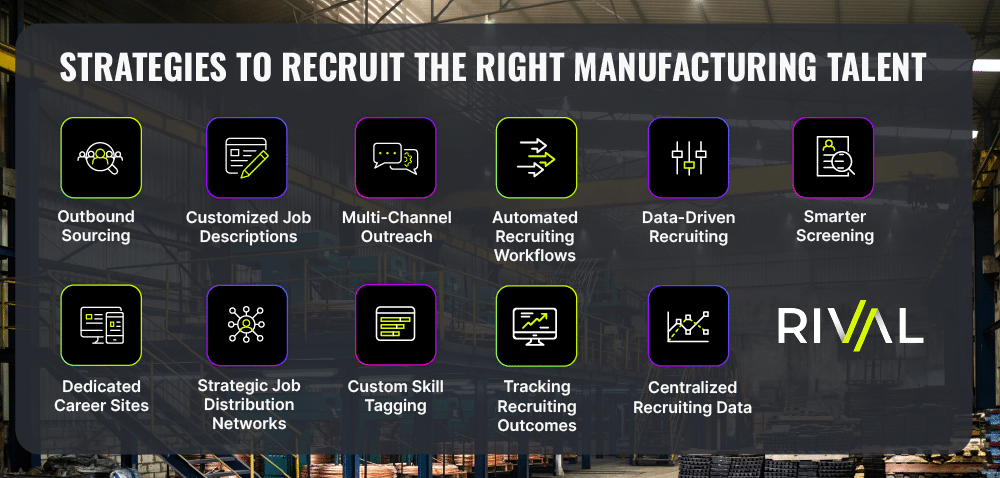
Here’s where leading manufacturing teams are focusing their efforts.

Proactive Outbound Sourcing for Technically Skilled Employees
One of the biggest challenges in manufacturing recruiting is that the most qualified candidates are rarely active job seekers. CNC operators, welders, maintenance technicians, and quality specialists are in demand across industries, and many are already employed.
Relying solely on inbound applications means competing for a small, highly visible group of candidates, often after competitors have already reached out.
Proactive outbound sourcing changes that dynamic. Instead of waiting for applications, recruiters actively search for candidates based on the skills, certifications, and experience that matter most on the floor. This includes welding or machining certifications, Six Sigma or ISO experience, and equipment-specific expertise. Plus, location-based filtering ensures candidates are within a realistic commuting distance.
This means manufacturing teams can engage qualified talent earlier, reduce time-to-fill, and improve overall quality-of-hire.
Customized Job Descriptions That Reflect Manufacturing Reality
Generic job descriptions are a common stumbling block in manufacturing recruiting. Candidates want clarity, not corporate language that could apply to any role in any industry.
Effective manufacturing job descriptions set clear expectations upfront. They address practical questions about shift schedules, overtime, safety standards, training opportunities, and career progression. They also reflect the specific environment candidates will be working in.
By tailoring job descriptions to the reality of each role and location, manufacturing teams attract candidates who are better aligned from the start, reducing early attrition and wasted screening time.
Multi-Channel Outreach That Matches How Manufacturing Candidates Communicate
Manufacturing candidates don’t all engage with job opportunities the same way, and many aren’t spending their days checking job boards or email.
To increase response rates, leading HR teams are expanding their outreach beyond traditional channels. SMS messaging enables faster, more direct engagement, while email supports detailed follow-up and documentation. AI recruiting software helps teams quickly locate the right talent pool. Mobile-optimized career sites ensure candidates can explore and apply for roles without needing a desktop computer.
A multi-channel approach keeps candidates moving through the recruiting funnel and reduces drop-off caused by slow or outdated communication.
Automate Recruiting Workflows to Remove Bottlenecks
Manual recruiting processes are a major source of delay in manufacturing hiring. Compliance tracking, pre-screening questions, interview scheduling, and approvals often live across disconnected tools, creating unnecessary friction for both recruiters and candidates.
Workflow automation helps manufacturing HR teams streamline these steps without sacrificing rigor. Pre-screening questions ensure candidates meet baseline requirements, compliance tasks are tracked automatically, and interviews are scheduled faster across shifts and stakeholders.
The result is HR manufacturing software that delivers smoother recruiting experiences, shorter hiring cycles, and less administrative overhead for HR teams.
Use Training and Performance Data to Recruit Smarter Over Time
Recruiting decisions don’t happen in a vacuum, or at least, they shouldn’t. Manufacturing leaders are increasingly connecting recruiting data with onboarding and performance outcomes to understand which sourcing channels, backgrounds, and certifications lead to faster ramp-up and longer tenure. That insight helps refine future recruiting strategies and improves quality-of-hire over time.
Reduce Resume Spam with Smarter Screening and Follow-Up
One of the biggest shifts in manufacturing recruiting over the past few years is the declining quality of applications. Many HR teams are seeing a surge in low-intent, mismatched, or AI-generated resumes submitted at scale. Job postings attract volume, but that volume often creates more work instead of better outcomes. Recruiters spend hours screening candidates who aren’t qualified, while strong candidates wait longer for responses, or disengage entirely.
At the same time, candidate ghosting has become increasingly common. Interviews go unconfirmed, follow-ups stall, and offers sit unanswered. In manufacturing environments, where scheduling, shift coverage, and coordination matter, that drop-off creates real operational disruption.
Smarter screening up front helps surface qualified candidates quickly while discouraging low-intent applications. Role-specific pre-screening questions, certification requirements, and location filters reduce resume noise before it reaches a recruiter’s inbox. Automated, consistent follow-up keeps candidates informed and engaged, reducing drop-off caused by slow or inconsistent communication.
With tools like Rival Recruit, manufacturing teams can apply structured pre-screening, automate follow-up, and maintain consistent candidate communication—reducing resume noise while keeping qualified candidates engaged through every step.

Create Dedicated Career Sites for Each Manufacturing Location
Manufacturing hiring is inherently local. Even within the same company, roles, shifts, and expectations can vary significantly by plant or facility.
That’s why high-performing manufacturers move beyond a single, generic careers page. Instead, they create location-specific career experiences that reflect what it’s actually like to work at each site.
Dedicated career sites allow teams to highlight:
- Facility-specific roles and schedules
- Local safety standards and certifications
- Training programs unique to that location
- Photos, videos, and testimonials from employees on that floor
This approach helps candidates quickly determine fit and helps recruiters attract applicants who are genuinely aligned with the role and environment, not just the company name.

Expand Your Job Distribution Network Strategically
Posting jobs everywhere isn’t the same as posting them well.
Manufacturing organizations often rely on a narrow set of job boards, which limits reach and creates unnecessary competition for the same candidates. Expanding job distribution thoughtfully helps surface roles to candidates who might not be actively searching but are open to the right opportunity.
Effective manufacturing recruiting strategies include:
- Distributing roles across general and industry-specific job boards
- Reaching candidates through trade schools, certification programs, and workforce organizations
- Ensuring postings are mobile-friendly and easy to apply to
- Developing a referral pipeline by leveraging your employees’ networks; When you have a culture people love, employees are more willing to tell people about your company
Use Custom Skill Tagging to Build Smarter Pipelines
Manufacturing recruiting isn’t just about filling today’s openings. It’s about building pipelines for the roles you know you’ll need again.
Custom skill tagging allows recruiters to label candidates based on certifications, equipment experience, shift availability, and past roles. Over time, this creates a searchable talent pool that can be activated quickly when new requisitions open.
Instead of starting from scratch each time, recruiters can:
- Re-engage candidates with relevant experience
- Segment pipelines by role, location, or skill
- Reduce reliance on external sourcing for repeat hires
- Onboard new employees with onboarding software for manufacturing that encourages new starters to stay
This is especially valuable for high-turnover or seasonal manufacturing roles, where speed matters.

Track Manufacturing-Specific Recruiting Metrics That Matter
Not all recruiting metrics are created equal—especially in manufacturing.
While time-to-fill and cost-per-hire still matter, manufacturing HR leaders benefit most from tracking funnel metrics tied to operational outcomes, such as:
- Time-to-productivity
- Early turnover by role or location
- Offer acceptance rates by shift
- Source-to-hire performance for specialized skills
These insights help teams identify where candidates are dropping off, which sourcing channels produce the strongest hires, and where process improvements will have the biggest impact.

Concentrate Recruiting Data in One System
Fragmented recruiting tools create blind spots. When sourcing, outreach, screening, and analytics live in different systems, it’s difficult to understand what’s actually working, and even harder to improve consistently.
Manufacturing teams that centralize recruiting data gain:
- Clear visibility into the entire hiring funnel
- Better collaboration between HR and hiring managers
- Faster adjustments when demand shifts
The Bottom Line
Manufacturing recruiting doesn’t fail because HR teams aren’t trying hard enough. It fails when systems aren’t designed for the reality of the work.
Rival Recruit helps manufacturing HR teams source talent proactively, reduce resume noise, automate follow-up, and gain clear visibility into the recruiting funnel, so hiring stays aligned with operational demand.
When recruiting works this way, teams spend less time reacting—and more time hiring the right people, faster.