Every organization today is feeling the tremors of change: economic uncertainty, AI-driven disruption, productivity pressure, and shifting expectations from a multigenerational workforce. But beneath all of that, something quieter—and more dangerous—is happening.
Culture drift.
It’s the slow erosion of trust, transparency, and engagement inside organizations. It doesn’t happen overnight. It happens when clarity fades, communication slips, and employees brace for the next wave of change without understanding what it means for them. And as we head into 2026, trust is becoming the most critical currency leaders have left.
In this article, we’ll recap a live discussion between Rival’s Chief Product Officer, Poornima Farrar, and WRKdefined’s William Tincup and Ryan Leary. We’ll cover
- Why trust is eroding inside organizations and the biggest warning signs to watch
- How AI, mobility, and transformation are reshaping what employees expect from leadership
- What HR and executives must do in 2026 to rebuild clarity, credibility, and cultural momentum
Be sure to watch the full episode here: Talent Transformed | Culture Drift: Why Companies Are Losing Trust Without Realizing It.
The Trust Crisis: Why Employees Are Going Silent
 Employees feel the pressure more acutely than ever. Raises and promotions are slowing, boards are obsessed with revenue-to-employee ratios, and productivity has become the default metric of leadership.
The result? Anxiety, guardedness, and a quiet shift that speaks volumes:
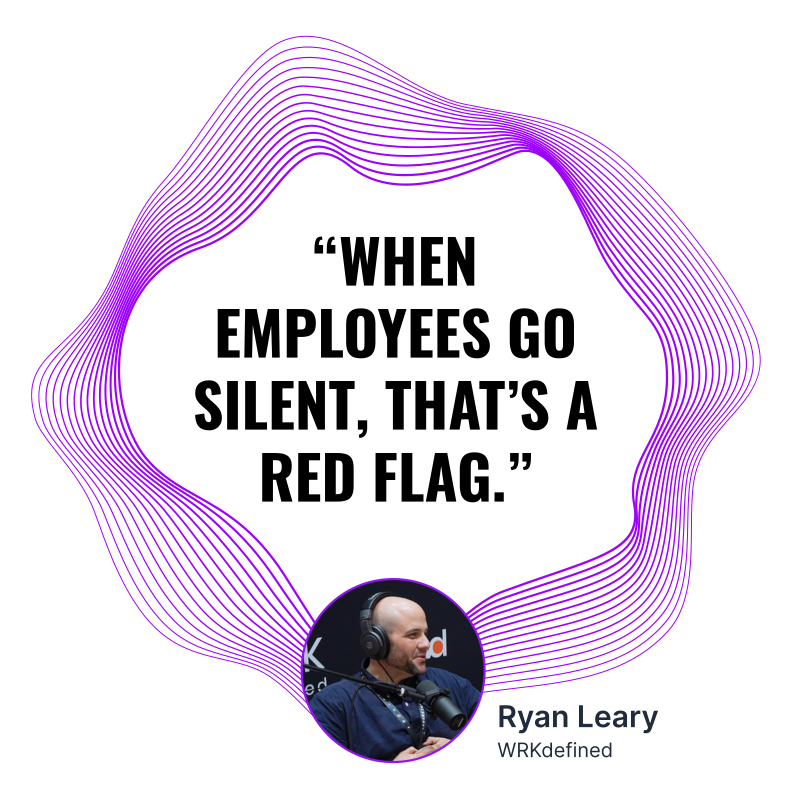
“When employees go silent, that’s a red flag.” — Ryan Leary, WRKdefined
Silence isn’t disengagement; it’s self-protection. And it’s one of the earliest indicators of culture drift.
The AI Paradox: Engagement vs. Displacement
For years, “engagement” meant making employees more productive. Now, with AI reshaping roles at unprecedented speed, transformation often feels less like empowerment and more like elimination. Teams hear promises of reskilling, yet many quietly brace for displacement, not development.
As Poornima highlighted:
“AI is bringing in business transformation: roles are changing or assimilating into other roles, some are going away. Leaders aren’t telling the truth. They need to be clear about what new technology means for people.” — Poornima Farrar, CPO, Rival
This is the tension HR must navigate heading into 2026: employees know change is necessary, but fear they won’t be included in the future being built around them. Transparency is no longer optional; it’s the price of trust.
Internal Mobility: Help or Harm?
Internal mobility should be a trust-building mechanism in 2026. Right now, it often becomes a trust-eroding one when:
- Lateral moves feel like step-downs
- Rejections are handled poorly
- Opportunities feel opaque or political
Employees aren’t just evaluating whether they got the role. They’re evaluating whether the process felt dignified and fair.
And mobility shouldn’t end at retention. One of the most powerful statements from the session was:
“HR is expanding the definition of internal mobility to people that are offboarded…showing cultural impact to people who are leaving can help HR reclaim that seat at the table.” —Poornima Farrar, CPO, Rival
Handled well, offboarding creates boomerang talent, brand advocates, and long-term trust, even among those exiting. It also shows the C-suite that HR isn’t just managing processes. It’s shaping culture and business resilience, which is exactly why HR belongs in core strategic conversations.
Agility Is the 2026 Operating System
With transformation accelerating, rigid, multi-year change roadmaps won’t survive 2026. They’re outdated by the time they’re approved.
Organizations now need:
- 6–9 month plans, not 12–24 month ones
- Sprint-based work models
- Flexible roles and workflows
- Tools that help HR adapt without waiting for IT
This is where digital transformation often breaks down. Everyone owns it, which can mean no one does.
“Everyone owns digital transformation (which means no one owns digital transformation). That results in janky, disjointed transformation efforts. At the leadership level, it needs to be pulled together. One of the things that erodes trust is employees see how disjointed these strategic initiatives often are in practice.” — William Tincup, WRKdefined
Heading into 2026, the fix must be clear ownership, unified leadership, and systems built for agility instead of rigidity.
Leadership Lessons from COVID as the Blueprint for 2026
During the pandemic, trust soared not because conditions were ideal, but because leaders led with humanity. They communicated, they checked in, and they cared. And employees remember.
As one speaker said:
“Go back to what we were doing during COVID. Leaders led. They communicated. There was care for the people. You didn’t just jump into business, but first started by asking ‘How are you doing? How is your mom doing?’ Bring that back. Lead with empathy.” — Ryan Leary and William Tincup, WRKdefined
Post-COVID, many leaders reverted to KPI-first communication, and culture drift grew in the silence. For 2026, leaders must relearn those trust-building muscles.
Practical Steps HR Teams Can Take in 2026 to Address Culture Drift
1. Communicate clearly and consistently
Say what you mean, mean what you say, and repeat it. Trust is built through clarity.
2. Invest in tools that create agility
HR shouldn’t need multi-year, costly implementations to evolve processes.
“Digital transformation is both for the HR tech stack and the candidate or employee experience. It’s about meeting the five generations that are in the workforce today where they’re at…Don’t make systems so complex that people have to learn a new way of working just for basic survival. Make the tools work for them.” — Poornima Farrar, CPO, Rival
3. Consider a Chief Transformation Officer
A single owner prevents the “janky,” fragmented experiences employees currently endure.
4. Balance compliance with flexibility
HR, IT, and Finance must collaborate to build workflows that support people and performance.
5. Treat offboarding as a cultural mirror
A dignified exit signals organizational maturity. It also strengthens the door for boomerang hires.
6. Be transparent about AI and mobility
People can handle change. What they can’t handle is uncertainty fueled by silence.
7. Culture Is Not a Perk—It’s a System
Culture isn’t built in the margins, at happy hours, or with swag. It’s built in the everyday processes, decisions, and experiences employees live inside.
As Poornima put it:
“Culture isn’t just going to ball games or happy hours. Culture is built so deeply into the processes organizations put into place. It’s your people, processes, and products. And ideally your software is giving you agility so you can have agility in your processes, like experimenting with an internal mobility process, or finding ways to making offboarding smoother.”
And at the top, as William put it:
“The C Suite has to want culture. And what you allow will be your culture.”
 Digital transformation is both for the HR tech stack and the candidate or employee experience. It's about meeting the five generations that are in the workforce today where they're at...Don't make systems so complex that people have to learn a new way of working just for basic survival. Make the tools work for them.

Poornima Farrar
Rival
Conclusion
Culture isn’t just about the people who stay. It’s also shaped profoundly by how organizations handle the hard and messy moments, like restructuring, shifting roles, or offboarding. Those experiences can either reinforce dignity or deepen distrust.
That’s why this line from the discussion is so important:
“If we can give them tools for these tougher experiences HR has to help organizations navigate [like offboarding]…that feeling of meaningfulness that we know HR is driven by can be recovered.” — Poornima Farrar, CPO, Rival
This is the heart of 2026: equipping HR with the agility, clarity, and technology to restore meaning to the moments that matter most. Because when tools support people (and not the other way around), trust is rebuilt from the inside out.
In 2026, trust, clarity, and agility will differentiate the organizations that adapt from those that erode. Culture is a living system and one that must be shaped intentionally and protected relentlessly. And the leaders who invest in rebuilding trust now will carry their organizations into the next era with confidence, credibility, and resilience.
If we can give them tools for these tougher experiences HR has to help organizations navigate [like offboarding)]...that feeling of meaningfulness that we know HR is driven by can be recovered.
Poornima Farrar
Rival