HR has more technology than it has ever had. But paradoxically, it also has more to manually coordinate than ever.
Those two facts are not unrelated.
According to SHRM, the average organization ran 26 HR modules in 2024, up from 10 just four years earlier. Most of those tools were bought to solve a real problem. None of them were designed to work with the others.
And so what HR has built, across a decade of reasonable-sounding technology decisions, is a Frankenstein’s monster stack (a Frankenstack, if you will) of point solutions connected by spreadsheets, manual data re-entry, strings and post-its, and the quiet heroism of the HR Coordinators who know where everything actually lives.
That is the environment AI is walking into.
If the workflows are manual and the data is siloed, AI hasn’t got a prayer of fixing the problem. It only amplifies it. The organizations extracting real value from AI in HR are the ones that did the foundational work first: connected systems, clean data, automated workflows. For everyone else, the AI investment lands with a thud, scaling everything you already hate.
This, in a nutshell, is what the shift to Talent Operations is about.
It’s not a new software category. Not a job title. Not a new function. It’s the decision to run HR the way high-performing operations teams run everything else: with connected systems, shared data, and accountability for outcomes.
TL;DR: Talent Operations is the shift from reactive HR administration to a proactive, connected operating model—one where systems, data, and workflows run together instead of in parallel. As AI becomes a real operational input rather than a pilot project, organizations with this foundation will use it well. Everyone else will be managing complexity at scale.
The Stack Gets Bigger. But is the Work Easier?
Despite significant HR technology investment, only 24% of HR leaders believe they’re getting maximum value from their HR tech. That gap between what the tech stack promises and what it delivers is an operating model problem.
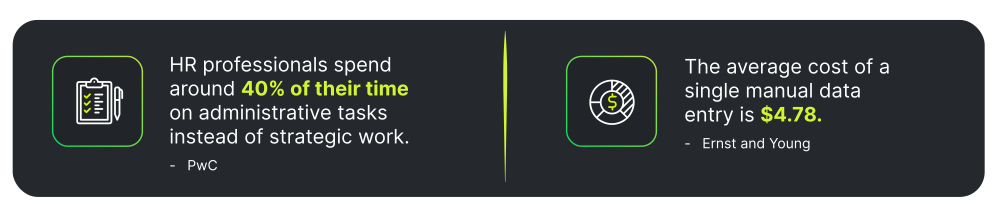
According to PwC, HR professionals spend around 40% of their time on administrative tasks instead of strategic work. Ernst and Young estimates the average cost of a single manual data entry at $4.78. Multiplied across an HR function that still uses email chains and spreadsheets to fill the gaps between systems, that is a structural cost that compounds with every tool added to the stack.

The AI readiness dimension makes this urgent. 61% of HR leaders are now in advanced stages of implementing generative AI, up from 19% in 2023. Gartner has found that adapting the operating model to AI has the highest predicted impact on AI productivity, higher than AI skills or AI knowledge sharing. The operating model is the variable. And it is the one most HR teams are not working on.
In a recent virtual session, Rival CEO Greg DiTullio and industry analyst Kyle Lagunas framed it directly: AI is either the biggest opportunity HR has ever had, or its biggest threat—and which one it becomes depends almost entirely on whether the operating model is ready to use it.
A recent MIT Sloan report echoed the same urgency: HR must evolve or risk redundancy. Not because AI replaces HR, but because HR organizations that do not adapt their operating model will be outpaced by the ones that do.
What Talent Operations Actually Means
Talent Operations is the shift from reactive to proactive—from responding to requests and chasing approvals, to running HR as a coordinated, strategic system with defined inputs, outputs, and accountability for both.
It requires three things to work in concert:
- Connected systems that hand off data automatically
- A single source of truth that reflects what is actually happening across the lifecycle
- Workflows that execute on logic rather than on someone remembering to do the next thing.
It is worth being clear about what that does not mean. It does not mean removing the human from HR.
Christina Stevens, Senior Manager of HRIS and Analytics at Andersen Tax—a nine-year Rival customer—put it plainly on a recent webinar: “Automation supports the experience. It does not define it.”

The goal is to take the manual coordination off HR’s plate so the function can focus on the work that actually requires human judgment: the hard conversations, the nuanced decisions, the relationships that no workflow can replace.
Where the Model Breaks Down—and What Fixing It Looks Like
Onboarding: The Most Visible Collision Point
Onboarding fails most often not because HR doesn’t care, but because it is a multi-team, multi-system event that nobody has designed as a single connected process. HR owns the experience. IT owns the access. Payroll owns the setup.
Each piece runs on its own timeline with no shared visibility into whether everything is on track.
On the same webinar above, Drew Burns, Lead HRIS Analyst at Southland Industries—which uses all four Rival products and manages 500+ hires a year with 200+ onboarding tasks per hire—described what a well-designed workflow actually does: it gets employees the information they need at the right time, without requiring an HR professional to manually intervene at every step, while still feeling personal rather than robotic.
Offboarding and Compliance: Where Gaps Become Risks
Offboarding is where the cost of a disconnected operating model becomes auditable. HR manages the exit. IT manages the access removal. Those tracks run independently in most organizations, creating a window between when HR closes an employee record and when IT revokes their credentials. That window is a security and compliance exposure.
For example, Andersen Tax’s offboarding historically relied on email and manual tracking, creating inconsistency across separation types and limited audit visibility. After building structured workflows in Rival, they were able to manage voluntary and involuntary separations with sequenced tasks, approvals, and direct HRIS integration.
This can be applied broadly, as Stevens noted: “I could easily show when somebody completed a task, when it was assigned to them, who did it…a couple clicks, I can show you exactly what happened.” That is what compliance-ready looks like.
The same applies to training and certification tracking. Mandatory compliance training assigned manually, completed in one system, and verified in another is not a compliance program—it is a liability.
How to Know If It’s Time to Shift Your Operating Model
Does any of this sound familiar?
- An HRIS is the system of record but not always the system of truth. The real data lives in a spreadsheet someone manually updates.
- Onboarding varies by manager or location because there is no standardized workflow.
- Compliance training completion requires a manual audit to verify.
- AI tools have been purchased but adoption is low because the data they need is not clean or connected.
- HR spends more time coordinating processes than doing the work those processes were designed to enable.
If so, you’re likely a candidate for change. But don’t worry, the path forward doesn’t have to be a massive transformation.
- Identify your high-volume processes.
- Map what is actually happening.
- Start with one workflow.
That is how the operating model shift works: not in a single sprint, but in a series of decisions that accumulate into a fundamentally different way of working.
Where Rival Can Help
Rival is the Talent Operations Platform built as a connected system with data flowing across the employee lifecycle rather than sitting in separate modules. Rival Workflow is the orchestration engine at the center: drag-and-drop workflow builder, conditional logic, automated notifications, built-in forms, e-signature, approval routing, compliance tracking, and over 2,000 integrations with the HRIS, ATS, payroll, and other systems already in your stack. No developer required. No IT project. HR builds it, HR runs it.
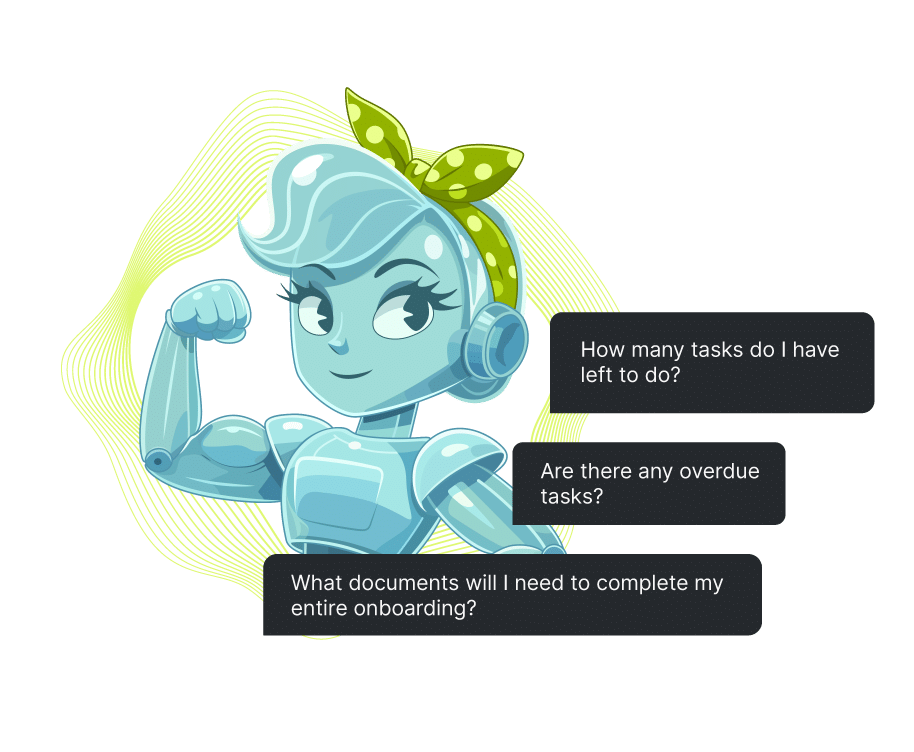
The results: 4x faster time-to-hire, 90% reduction in manual preboarding tasks, compliance that is auditable in clicks, and an HR function with the time, the data, and the operating model to do the work it became HR to do.