 A signed offer is an exciting moment. But don’t start celebrating too early. You’ve just entered one of the most critical periods in every new hire’s work journey, and you’ll want to be on your toes! Your new hire will be watching you closely to be sure they’ve made the right decision, and the clock has just started.
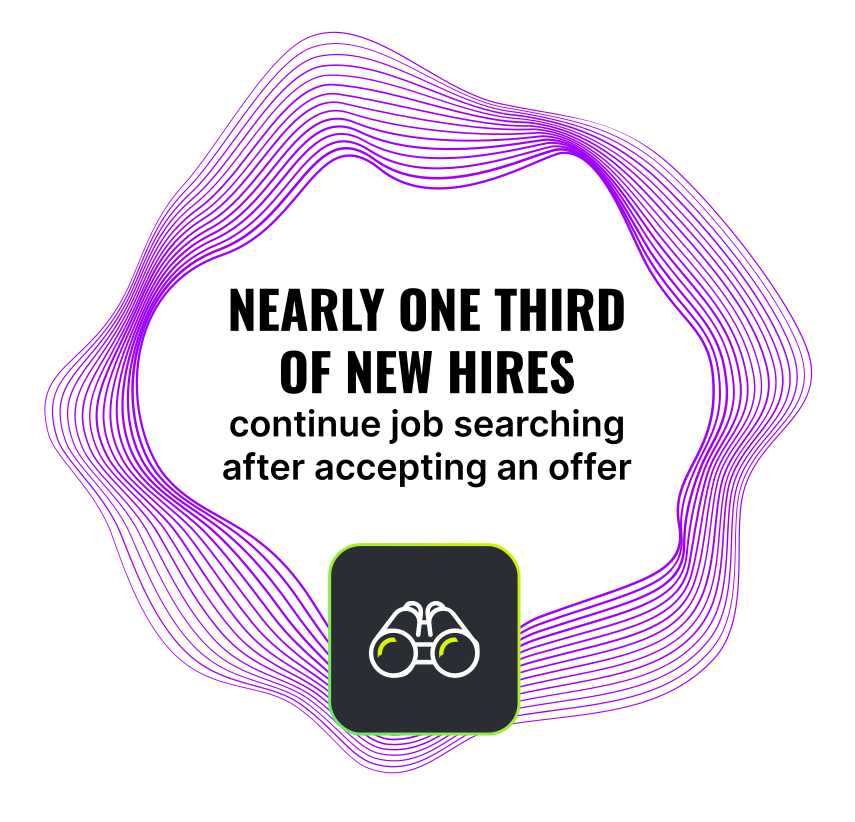
The time between a signed contract and day one is a quiet but risky window where excitement can fade, doubts can creep in, and competing offers can resurface. In fact, studies regularly show that nearly one third of new hires continue job searching after accepting an offer often because they feel uncertain about what’s coming next.
That’s why it’s so important to be thinking about pre-onboarding (also known as preboarding) engagement as part of your onboarding process.
Pre-onboarding engagement is the set of intentional touchpoints, tasks, and communications that happen after a candidate signs their offer but before their first day, designed to create clarity, connection, and confidence. Done well, it reassures new hires that they made the right decision, builds early momentum, and sets expectations before their first calendar invite ever appears.
When this phase is overlooked, HR teams end up playing catch-up on day one. When it’s designed well, onboarding starts feeling natural instead of overwhelming.
So how can you design an effective pre-onboarding period, with minimal burden on your team? That’s what this post is all about.
10 Effective Pre-Onboarding Engagement Activities
Strong pre-onboarding doesn’t require more meetings or manual follow-ups. It requires the right mix of human moments and structured workflows, so new hires feel welcomed without HR chasing tasks across email threads.
Below are ten proven pre-onboarding engagement activities that help new hires feel informed, prepared, and genuinely excited to start.
1. Pre-Onboarding Email With a Personal Touch
Start with a message that does more than confirm a start date. A short, warm note from HR or the hiring manager, paired with an overview of what happens next, immediately reduces uncertainty. Bonus points if it includes links to benefits info, a welcome video, or a clear new employee onboarding checklist.
2. Virtual Meet-the-Team Video
A quick intro video from the team or manager helps new hires put faces to names early. This is especially impactful for remote or hybrid roles, where day-one social context can feel thin.
3. Access to a Welcome Portal or Shared Channel
Giving new hires early access to a welcome hub—whether it’s a portal, Slack channel, or resource center—creates a single place for questions, resources, and updates. It signals organization and transparency from the start.
4. A Pre-Day-One Checklist (and Workflow)
Clear, automated checklists eliminate guesswork. New hires know exactly what’s expected, and internal teams know when their tasks are triggered, without manual reminders.
5. Company Culture Quiz or Light-Touch Survey
A short, low-pressure survey or quiz about values, working preferences, or culture is a fantastic way to engage new hires mentally before they engage operationally. It also gives HR and managers useful insight before day one.
6. Send a Welcome Gift
A small, thoughtful welcome gift (even something simple like branded swag or a handwritten note) creates an emotional anchor before day one. It reinforces that the hire is expected, prepared for, and genuinely welcomed. For remote teams especially, this can be the first tangible signal of belonging.
7. Introduce a Manager or Buddy Early
Assigning an onboarding buddy or encouraging a brief manager check-in before day one helps new hires feel less isolated. It gives them a friendly face for “small questions” and reduces first-week hesitation. This doesn’t need to be a meeting. A short intro message or welcome note often does the job.
8. Share Learning Materials or Preboarding Content
Pre-onboarding isn’t a training exercise. Right now it’s about orientation. Sharing light, optional content (company story, product overview, operating principles) helps new hires arrive with context, not cognitive overload.
9. Gamify the Prep Where It Makes Sense
Checklists, quizzes, or progress indicators can make preboarding feel motivating rather than bureaucratic. When people can see what’s done, and what’s coming next, anxiety drops and momentum builds.
10. Use Automated Reminders and Updates
Silence is what creates doubt. Automated reminders—like confirming paperwork, equipment delivery, or next steps—can reassure new hires without requiring HR to manually follow up.
Pre-Onboarding Survey Questions
Pre-onboarding surveys work best when they’re short, human, and clearly optional. The goal isn’t to collect exhaustive data, but to surface early signals that help you personalize the experience and prevent friction.
Below are practical examples of questions you can use (or adapt) before day one.
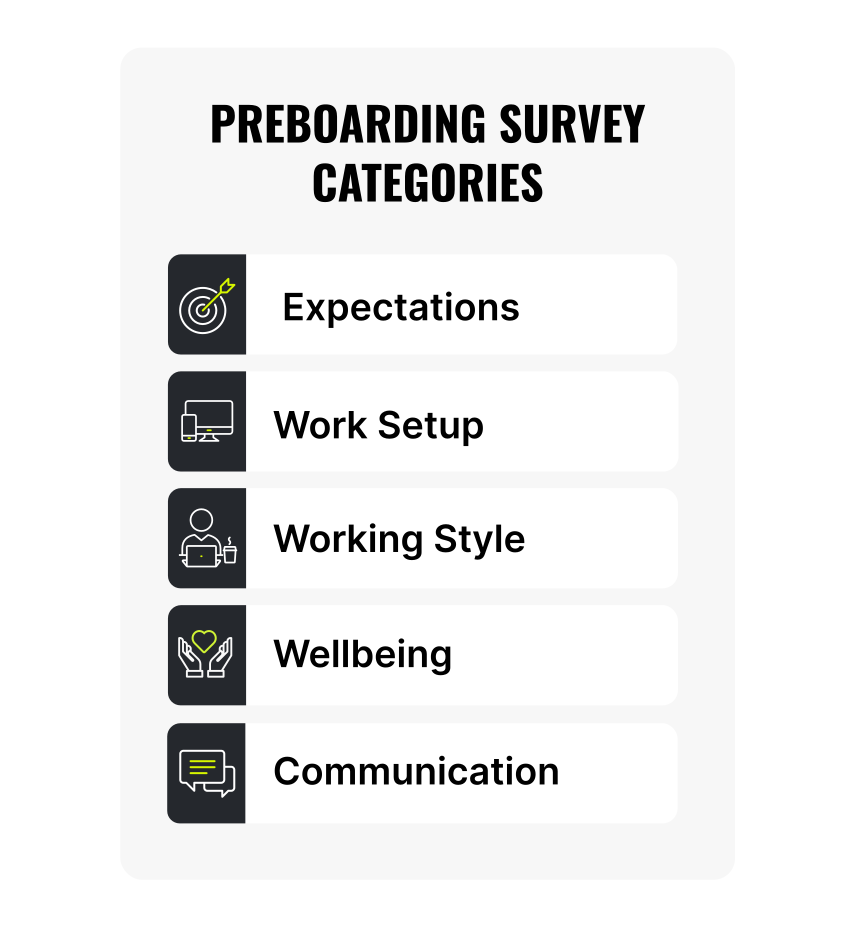
Questions About Expectations
These help managers understand what success looks like from the new hire’s perspective.
- What are you most excited about in this role?
- What would make your first 30 days feel successful?
- Is there anything you’re hoping to learn quickly in your first few weeks?
Questions About Work Setup
These questions reduce day-one distractions and IT follow-ups.
- Do you have everything you need to work comfortably from day one?
- Do you have any equipment, accessibility, or workspace considerations we should know about?
- Are there any tools or systems you’ve used before that you found especially helpful?
Questions About Working Style
Understanding preferences early helps managers adapt faster.
- How do you prefer to receive feedback?
- Do you tend to work best with written guidance, live discussion, or a mix of both?
- What helps you stay focused and productive?
Questions About Wellbeing at Work
Wellbeing is all about whether people feel known, comfortable, and supported in small, everyday ways. Pre-onboarding questions in this category should signal care without prying, and give teams insight they can actually use to create a more human experience.
Example questions include:
- Is there anything we should keep in mind to support your wellbeing at work?
- Are there any boundaries or working preferences you’d like us to respect early on?
- Do you have any accessibility, dietary, or wellness needs we should know about?
- What size sweatshirt/t-shirt do you prefer?
- What’s your go-to treat for a birthday celebration?
- What’s your favorite gift card to get for a rewarding splurge?
- What’s your favorite midday snack?
These light-touch questions can be passed along to managers, and help teams personalize early moments—welcome gifts, swag celebrations, recognition—without assumptions. More importantly, they reinforce that wellbeing shows up in everyday details, not just policies.
Questions About Communication
Clear communication expectations reduce misalignment later.
- How do you prefer to communicate day to day?
- How often do you like to check in with your manager?
- Is there anything that makes communication easier or harder for you?
Used thoughtfully, these questions help onboarding feel responsive instead of rigid, and they give managers a head start on building trust.
How to Automate Pre-Onboarding Engagement
Pre-onboarding breaks down when it relies on memory, inboxes, and one-off follow-ups. Automation is what makes engagement consistent, without making it feel impersonal.
With the right HR workflow automation in place, pre-onboarding becomes a coordinated experience rather than a scramble. Tasks trigger automatically. Messages land at the right moment. Everyone knows what’s next.
Automation makes it easier to:
- Send welcome messages and reminders without manual chasing
- Share pre-day-one checklists that update in real time
- Trigger surveys, introductions, and equipment requests automatically
- Ensure compliance tasks are completed and documented before day one
This is where HR process automation earns its keep. Instead of spending time tracking who’s done what, HR teams can focus on how new hires are actually feeling.
Platforms like Rival’s workflow tools are designed to support this exact moment, connecting people, tasks, and communication in one place so nothing falls through the cracks.
Explore how this works in practice with Rival Workflow: https://rival-hr.com/platform/rival-workflow/
Set the Tone for Long-Term Engagement
Pre-onboarding is your first chance to show new hires how your organization actually operates, not just what you say you value.
When engagement starts early:
- New hires feel confident instead of anxious
- Managers start aligned instead of reactive
- HR teams spend less time fixing problems later
You don’t need more touchpoints. You need better ones, supported by workflows that make consistency easy.
Pre-onboarding engagement isn’t about doing more. It’s about doing the right things, at the right time, with the right level of structure. And when that foundation is in place, day one stops feeling like a reset and starts feeling like a continuation.