The time between offer acceptance and day one is short, but it’s one of the most critically important moments in a new employee’s tenure.
Your new hire has said yes, likely turned down other opportunities, and mentally started imagining themselves in a new role. At the same time, they’re navigating uncertainty: new people, new systems, new expectations. What happens during this window shapes how they arrive on day one whether they show up energized and confident, or anxious and already on the back foot.
This is where the pre-onboarding (also known as preboarding) email plays an outsized role.
Too often, pre-onboarding emails are treated as a box to check. They’re a quick confirmation of start date or maybe a link to paperwork; sent once and forgotten. But in reality, these emails are your first opportunity to show new hires how your organization communicates, prepares, and cares.
In this article, we’ll look at how to write effective, engaging pre-onboarding emails that build trust, reinforce a great decision, and set new hires up for a strong start. You’ll see what makes these emails work, examples of good (and improvable) approaches, and a ready-to-use pre-onboarding email template you can copy and adapt for your own HR workflow automation.
Why pre-onboarding emails matter more than you think
Pre-onboarding emails sit at the intersection of logistics and emotion. That’s what makes them so powerful and so easy to underestimate as part of a new employee onboarding checklist.
When written well, they quietly solve problems before they surface. When written poorly (or skipped entirely), they create uncertainty that spills into onboarding and beyond.
Build excitement and reduce anxiety before day one
Starting a new job is one of the most emotionally charged transitions people make. Even highly confident professionals feel a mix of excitement and apprehension. They wonder what the first day will be like, whether they’ll know anyone, and what’s expected of them right away.
A strong pre-onboarding email reduces that mental load.
By clearly outlining what’s coming next—when they’ll hear from you again, what they need to do (if anything), and what day one will look like—you replace guesswork with reassurance. You’re telling new hires, “We’ve got this covered. You’re not walking into chaos.”
That sense of calm is not a soft benefit. It directly affects how people show up, how open they are to learning, and how quickly they feel comfortable asking questions once they start.
Strengthen your employer brand
Employer brands aren’t built only through careers pages and recruitment campaigns. It’s reinforced, or undermined, through everyday moments like email communication.
Pre-onboarding emails are often the first messages new hires receive after becoming “official.” They’re paying attention. The tone, clarity, and polish of these emails signal what it’s actually like to work at your organization.
A thoughtful, well-structured email reinforces that your company is organized, welcoming, and intentional. A rushed, generic message can unintentionally suggest the opposite, even if that’s not the reality once someone starts.
Reduce first-week drop-offs and no-shows
The period between offer acceptance and start date is one of the highest-risk moments in the hiring process. Without consistent communication, candidates can disengage, second-guess their decision, or accept a competing offer.
Pre-onboarding emails help keep momentum intact. By staying in touch and reaffirming excitement, you keep new hires connected, making it far more likely they show up on day one ready to start, not second-guessing their choice.
Set expectations and next steps
One of the most common sources of early frustration for new hires is not knowing what’s expected of them. A good pre-onboarding email answers practical questions upfront. Do they need to complete paperwork? Should they prepare anything? Who should they contact if they have questions? What will the first day look like?
Clarity here reduces unnecessary back-and-forth, prevents last-minute scrambles, and helps onboarding start on solid footing. When expectations are clear before day one, managers and HR teams spend less time correcting misunderstandings later.
What does good pre-onboarding email need
There’s no single formula for the perfect pre-onboarding email, but there are clear patterns that separate effective emails from forgettable ones.
The best pre-onboarding emails balance warmth with structure. They feel personal without being vague, and informative without being overwhelming.
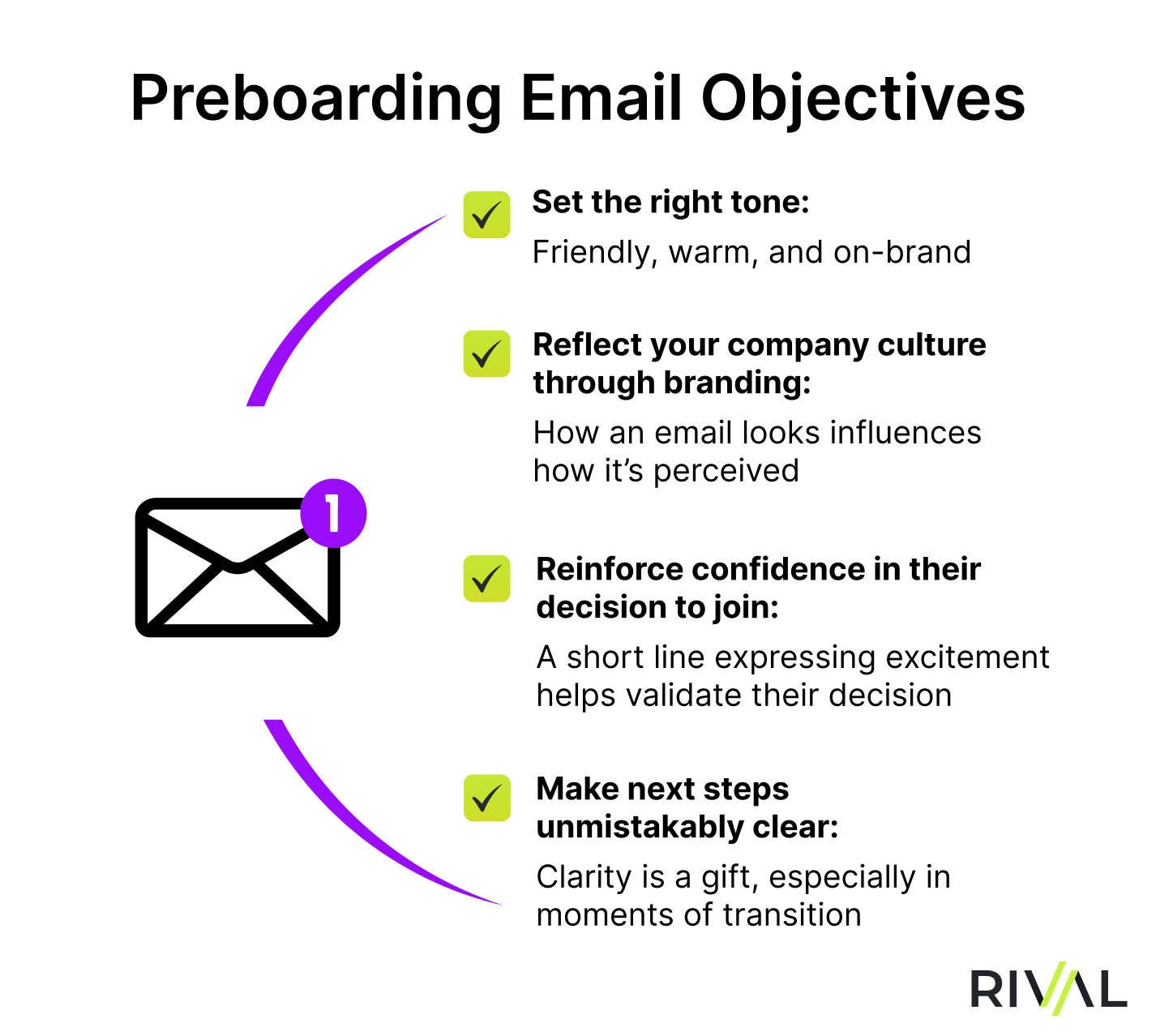
Set the right tone: friendly, warm, and on-brand
This email is not a legal notice or a system alert. It’s a welcome.
The tone should sound human, like it’s coming from a real person who’s genuinely glad the new hire is joining. Overly formal language can create distance, while an overly casual tone may feel unprofessional depending on your culture.
The key is alignment. If your organization prides itself on approachability, let that show. If your brand is more polished and professional, keep the warmth without slipping into stiffness. Above all, avoid language that makes the email feel automated or impersonal, even if it is automated behind the scenes.
Reflect your company culture through branding and presentation
How an email looks influences how it’s perceived.
Clean formatting, intentional spacing, and light branding elements (like your logo or brand colors) help the email feel thoughtful rather than transactional. Visual consistency between recruiting, pre-onboarding, and onboarding communications reinforces trust and professionalism.
This doesn’t mean overdesigning. It means making the email easy to read, visually calm, and clearly part of your organization’s experience, not an afterthought sent from a generic inbox.
Reinforce confidence in their decision to join
One of the most important, and often missed, jobs of a pre-onboarding email is emotional reinforcement.
A short line expressing excitement about the new hire joining, referencing their role, or acknowledging what they’ll be contributing helps validate their decision. It reminds them why they chose your organization in the first place.
This reinforcement matters. It builds commitment and keeps enthusiasm high during a period when doubt can creep in if communication goes silent.
Make next steps unmistakably clear
Finally, a strong pre-onboarding email removes ambiguity.
If there’s something the new hire needs to do such as completing forms, confirming details, or watching for a follow-up, make that explicit. If there’s nothing they need to do yet, say that too. Clarity is a gift, especially in moments of transition.
Well-structured emails use short paragraphs, clear calls to action, and simple language. They respect the reader’s time and reduce the chance of missed steps or unnecessary questions.
Examples of effective pre-onboarding emails
Before jumping into templates, it helps to look at real-world examples and understand how they work. Effective pre-onboarding emails tend to strike a careful balance. They’re informative without being overwhelming. Friendly without being casual to the point of vagueness. And clear about what’s coming next without turning into a task dump.
Example 1: Clear, calm, and confidence-building
This type of pre-onboarding email focuses on reassurance.
It typically opens with a warm welcome, confirms the start date and role, and briefly explains what the new hire can expect next, without asking them to do too much right away. The tone is steady and professional, signaling that the organization is organized and prepared.
What works well here is restraint. The email doesn’t try to front-load information meant for onboarding. Instead, it answers the questions new hires are most likely asking in that moment: Did everything go through? What happens now? Who can I contact if I need help?
If there’s room for improvement, it’s often in personalization. Even one or two role-specific details, such as referencing the team they’ll be joining, can make an otherwise solid email feel more human.
Example 2: Warm, branded, and culture-forward
Another effective approach leans more into culture and connection.
These emails often include light branding, a friendly message from the hiring manager or team, and a short nod to the company’s mission or values. They’re especially effective for roles where collaboration and culture fit are central to success.
The strength of this style is emotional reinforcement. It helps new hires visualize themselves as part of the organization before day one, which can increase engagement and reduce early uncertainty.
The risk, if overdone, is vagueness. Culture-forward emails still need to include clear next steps and logistics. Warmth works best when paired with clarity.
Copy & paste: Free pre-onboarding email templates
Below are two ready-to-use pre-onboarding email templates you can copy, paste, and adapt. They’re intentionally written to be flexible and easy to personalize without requiring a complete rewrite.
Template 1: The essential welcome (HR-led)
This template works well as your first pre-onboarding email, sent shortly after offer acceptance.
Subject Line: Welcome to [COMPANY NAME]! Here’s what to expect next.
Hi [First Name],
We’re excited to officially welcome you to [Company Name]!
Your start date is confirmed for [Start Date], and we’re looking forward to having you join us as [Job Title]. Between now and your first day, we’ll take care of a few setup steps to make sure everything is ready for a smooth start.
Here’s what to expect next:
- You’ll receive a separate email with any required paperwork to complete
- We’ll be in touch closer to day one with details about your first day and schedule
- If you have any questions in the meantime, you can reach out to [HR Contact Name] at [Email Address]
There’s nothing you need to prepare right now unless noted otherwise. We’ll guide you each step of the way.
We’re glad you’re here, and we’re looking forward to getting started.
Warm regards,
[Sender Name]
[Title]
[Company Name]
Template 2: The manager-led, relationship-building email
This version works well when sent a few days before day one, or alongside the HR-led email.
Subject Line: Excited to have you on the team, [NAME]!
Hi [First Name],
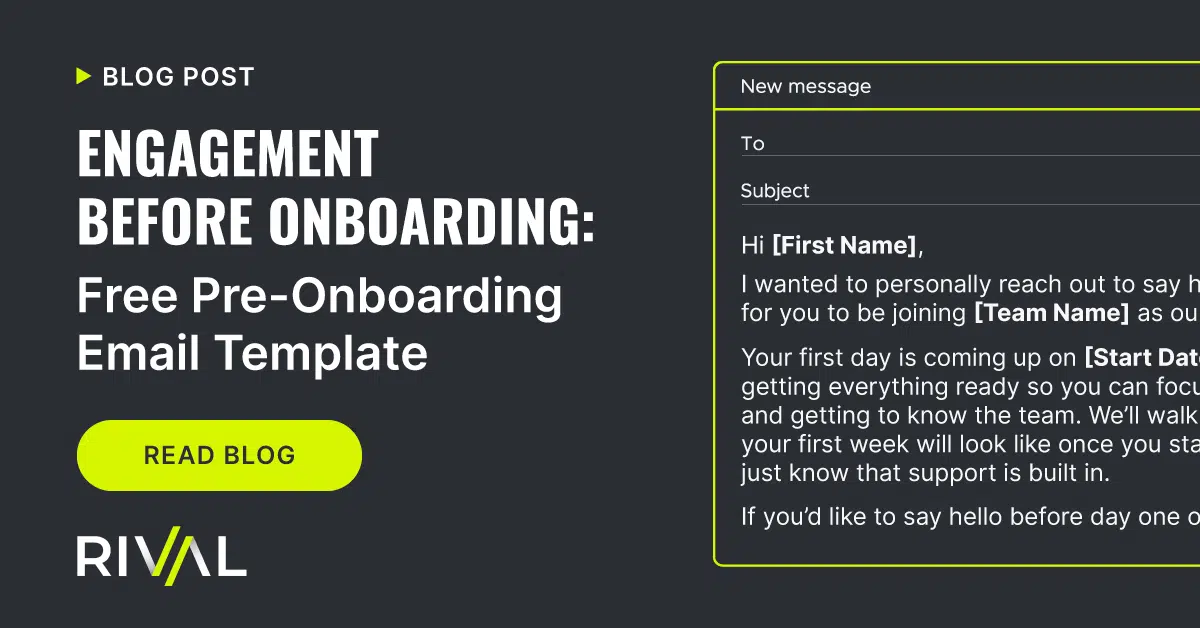
I wanted to personally reach out to say how excited I am for you to be joining [Team Name] as our new [Job Title].
Your first day is coming up on [Start Date], and we’re getting everything ready so you can focus on learning and getting to know the team. We’ll walk through what your first week will look like once you start, but for now, just know that support is built in.
If you’d like to say hello before day one or if anything comes up, I’m always happy to connect.
Looking forward to working together soon,
[Manager Name]
Automation vs. personalization: finding the right balance
One of the most common questions HR teams ask is whether pre-onboarding emails should be automated or personalized. The answer is both.
Making these emails part of your HR process automation ensures that every new hire receives timely, consistent communication, without relying on manual follow-ups or memory. It’s what prevents missed emails, delayed welcomes, and uneven experiences across teams.
Personalization is what makes those emails feel human.
The strongest pre-onboarding processes use automation to handle when messages are sent, and personalization to shape how they’re received. Dynamic fields like name, role, team, start date, and manager allow automated emails to still feel thoughtful and relevant.
When automation handles the mechanics, HR and managers have more time to focus on meaningful connection—rather than chasing logistics.
Automate your pre-onboarding workflows with Rival
Pre-onboarding emails don’t exist in isolation. They’re part of a broader sequence of tasks, handoffs, and communications that all need to happen before day one.
With Rival, pre-onboarding emails can be triggered automatically as part of a complete workflow. When an offer is accepted, Rival Workflow can:
- Send pre-onboarding emails at the right moments
- Assign paperwork and track completion
- Notify IT and managers of upcoming tasks
- Ensure nothing slips through the cracks
Instead of managing pre-onboarding through inboxes and spreadsheets, HR teams gain a clear, repeatable system that delivers consistent experiences at scale.
Because when new hires feel prepared before day one, onboarding becomes what it should be: focused, welcoming, and forward-looking.