Employee exits don’t typically come with the same pomp and circumstance as welcoming new hires. Maybe there’s a farewell lunch or a quick Slack send-off and then it’s straight to backfilling the role or redistributing work. But smart HR teams apply design thinking to offboarding, because they know offboarding has a lasting impact on brand reputation and business continuity. They also understand that the details of offboarding are critical to protecting your company’s systems, data, and reputation.
According to Wing Security, 63% of businesses admit that former employees still access some company data. And Nudge Security found IT professionals spend an average of five hours per employee manually offboarding cloud and SaaS access. That’s a lot of risk and wasted time.
A clear offboarding workflow ensures every box gets checked—from final pay and benefits to asset recovery and access removal—so nothing slips through the cracks.
In this blog, we’ll break down why offboarding matters, what it should include, and how to do it right every time. You can also download our FREE Employee Offboarding Checklist and customize these steps for your organization.
Why Offboarding Matters
While offboarding is a key moment in the employee experience, it’s much more than a courtesy. It’s risk management. Every departing employee triggers a laundry list of compliance requirements, security protocols, and cultural ripple effects that need to be addressed.
When offboarding goes off the rails, you could end up with:
- Data breaches: A forgotten login or unrevoked credential can expose your organization to a security incident.
- Compliance gaps: Late or inaccurate final pay, mishandled benefits, or missing documentation can lead to fines or legal exposure.
- Cultural fallout: Mismanaged offboarding sends the message to remaining employees that details and people are an afterthought and can do serious damage to your brand.
On the flipside, a well-structured offboarding process closes the loop with professionalism and precision, ensuring compliance, protecting sensitive data, and preserving goodwill.
When you have the right workflow automation in place, you don’t have to remember all the details every time an employee leaves. HR workflow automation helps HR and IT teams coordinate each step with care so you can offboard confidently.
Offboarding vs. Onboarding
How you welcome an employee into your company and how you say goodbye are defining moments in the employee experience. Both have an outsized impact on your employer brand. Onboarding builds trust and offboarding reinforces it.
Here’s how the two mirror each other:
| Onboarding | Offboarding |
|---|---|
| Setting up system access and permissions | Removing system access and recovering assets |
| Introducing your culture, values, and team | Reinforcing culture with a respectful exit |
| Collecting personal and payroll details | Finalizing pay, benefits, and legal documentation |
| Setting clear goals and expectations | Capturing institutional knowledge and lessons learned |
| Building engagement and connection | Protecting data and maintaining reputation |
Onboarding gets the spotlight, but offboarding requires the same structure and care.
Key Benefits of a Structured Offboarding Process
We’ve touched on why offboarding matters and the risks of getting it wrong. Here’s how a structured offboarding process pays off in the short and long term:
Compliance and Legal Protection
A standardized process ensures all the legal and regulatory requirements are squared away, including final paychecks, benefit continuation, and documentation retention. It’s essential in reducing the risk of costly errors and penalties.
Protecting Company Assets & Data Security
Every employee is connected to dozens of systems and devices. Automating offboarding with Rival Workflow helps you to remove access instantly, trigger IT notifications, and track asset recovery.
Maintaining Employer Brand & Employee Experience
People remember their last day. Give them a respectful farewell and leave the door open for referrals or even a future boomerang hire.
Step-By-Step Employee Offboarding Checklist
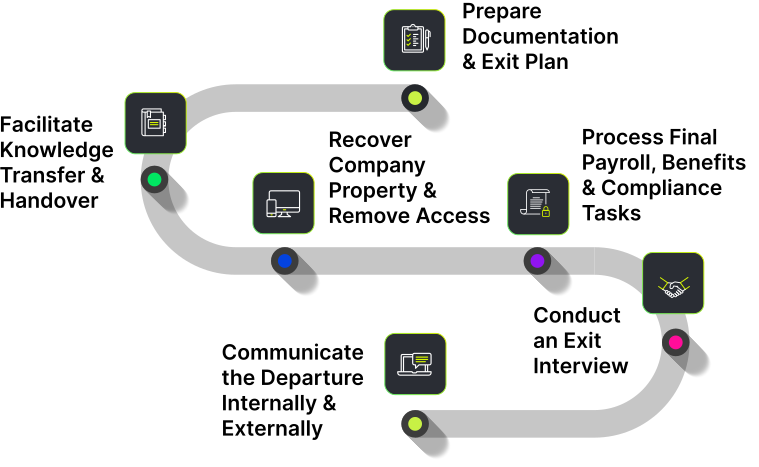 Offboarding will vary slightly depending on who’s leaving and why, but you need a consistent framework to make sure nothing gets missed. Key steps are outlined below, all of which can be easily automated and tracked with Rival Workflow, reducing manual work and human error.
👉 Download our free Employee Offboarding Checklist to get a printable, customizable version for your HR and IT teams.
1. Prepare Documentation & Exit Plan
Before your employee’s last day, confirm the resignation or termination details, update records in your HRIS, and notify relevant teams (HR, IT, payroll, manager).
2. Facilitate Knowledge Transfer & Handover
Document ongoing projects and key external contacts and assign ownership for unfinished tasks.
3. Recover Company Property & Remove Access
Collect all company assets (laptops, badges, mobile devices, credit cards) and revoke access to systems, cloud apps, and shared drives.
4. Process Final Payroll, Benefits & Compliance Tasks
Ensure finance issues the final paycheck, including unused PTO (if applicable), and confirm benefits continuation or COBRA. Check that all compliance paperwork is completed, such as separation letters, final pay acknowledgments, and NDA reaffirmations.
5. Conduct an Exit Interview
Structure the conversation around what’s working well at your company and areas for improvement. Make sure you feed this information back into your organization to improve retention and culture.
6. Communicate the Departure Internally & Externally
Keep everyone informed about the departure, including team members taking over work and external partners, vendors, and clients. As part of your communication, recognize your departing employee’s accomplishments and sincerely thank them for their contributions.
Following these six basic steps will keep you compliant and ensure the transition is smooth for everyone involved.
Best Practices for Effective Employee Offboarding
Even when you follow every step, offboarding can go awry unless you keep these guiding principles in mind throughout the process.
Standardize Processes with Templates
You shouldn’t have to start from scratch every time someone gives their notice. Keep it simple with templates for things like exit communications, asset returns, and compliance paperwork.
Prioritize Clear Communication
Transparency builds trust. Keep everyone involved—managers, IT, payroll, your departing employee—in the loop with details they need to make it a smooth transition.
Focus on Employee Experience
The tone of your offboarding should match your culture and values. Any deviation from that will erode trust and jeopardize your employer brand.
Use Technology and Automation Tools
Tech is your friend! Rival Workflow allows you to automate notifications and assign tasks such as access removal and exit interviews. You get peace of mind and save time.
Common Offboarding Mistakes to Avoid
We’ve all seen (or been a part of) a poorly handled exit. Keep the cringe-factor low by avoiding these common onboarding mistakes:
- Leaving the digital door unlocked: All it takes is one active login for a security incident. Revoke access before the farewell cupcakes are gone.
- Skipping the exit interview: Yes, feedback can be uncomfortable, but it’s necessary for growth. Have this final conversation to learn what’s working and what’s not.
- Not communicating the departure: Rumors fill silence. Get out ahead of office chatter and keep it professional.
- Overlooking knowledge transfer: Veteran employees often have institutional knowledge that’s hard to replace. Capture it before they walk out the door and minimize productivity loss.
Most of these mistakes are not intentional. They happen because offboarding tasks live in disparate systems and spreadsheets. HR process automation tools like Rival Workflow centralize everything to keep you organized and audit-ready.
Building a Smooth Offboarding Experience
You can’t predict every departure, but you can be prepared for all of them.
Review the best practices in this article and find where there are opportunities to improve. Dedicating the same care to departing employees as new hires ensures compliance, safeguards your reputation, and sends them off with respect and clarity.